Posts

Losing the Booths : Internal Exclusion and the Risks of Re-traumatisation

Image
"Exclusion and seclusion can echo relational trauma and systemic trauma; physical restraint can echo physical and sexual abuse. Retraumatisation... may drive even more challenging behaviour." (Centre for Mental Health: Briefing 54) Trapped by Ashley Huisman A number of cases recently have seen mothers taking, or threatening to take their child's school to court for the seemingly barbaric systems of internal exclusion that are in use. Mothers of children with ADHD, with ASD, with mental health difficulties, with family trauma. The mother of a son who spent a third of his school year in ‘isolation’. The mother of a daughter who attempted suicide while she was in an isolation booth. I'm glad that it’s been widely reported on the BBC and even made the front page of the Guardian a couple of weeks ago; we downplay cases like this at our peril. There is now an active ‘ ban the booths ’ campaign group, and the first ‘ lose the booths ’ conference took place in L...

Telling Your Own Story

Image
"To survive, you must tell stories" (Umberto Eco) 'Writing My Heart Out' by Gladiola Sotomayor A couple of months ago I was approached by an arts organisation who were looking to work with a group of students who had writing difficulties. They would run a series of workshops with them, helping each student develop ideas for their own play, then have a team of playwrites and scribes turn these ideas into a set of playscripts. Finally, these scripts would be given to a team of actors, and students (and their families) would have the chance to see their own plays performed on stage. It was aimed at dyslexic students, but I broadened the definition to ensure we had a cohort who would be able to engage with the project and see it through to the end. So with the dyslexic students I also included some who were autistic, and others who had a range of social communication and mental health problems. The theatre company's line was that it was fo...

Roger Scruton and the Conservative view of Education

Image
"Society needs an educated elite" (Roger Scruton, 2019) Roger Scruton (1944 - 2020) - philosopher, writer, conservative Portrait by Alan J Lawson It is difficult to remain right wing if you are in education. It relies on accepting that there is a ‘natural’ hierarchy in society, with some at the top and others at the bottom. Such a view falls apart when you spend every day with the people at the bottom, routinely exposed to the fact that in no fair and good world do they deserve to be there. The belief that there exists a reasonable and defensible hierarchy of citizens is rarely spoken of these days. Which makes it all the more fascinating when it is. The death last month of Roger Scruton prompted a new wave of reflection on his views on everything from islamophobia to fox-hunting, aesthetics to nationalism. For me he is a particularly useful figure in deconstructing the Conservative view of education. As well as being a nuanced and articulate writer, he is als...

Autism, Superpowers and Disabilities

Image
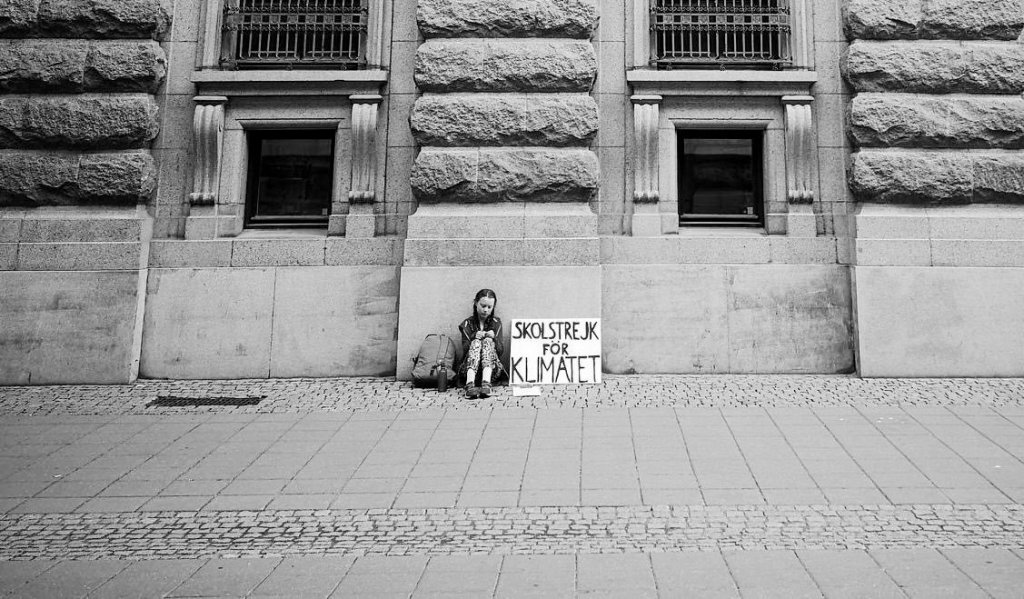
"Given the right circumstances, being different is a superpower." Greta Thunberg. Greta Thunberg holding her first climate strike, August 2018, outside the Swedish parliament When Greta Thunberg compared her Autism to a 'superpower', she thrilled a growing movement of neurodiversity advocates, eager for another prominent spokesperson to proudly show the world that autism is a difference not disability. It is an approach that has informed the direction of travel for a great deal of SEN policy and practice in the 21st Century so far. Dyslexic students are described not as having a learning difficulty but as having a dyslexic-type learning preference . The philosophy of neurodiversity is quite simple: Different people's brains work in different ways. For people on the spectrum of dyslexic type difficulties, this will mean a preference for visual, kinaesthetic learning activities. For many on the autistic spectrum, this will mean a preference for rout...

Private Schools, Charities, and Power

Image
"Charity is No Substitute for Justice Withheld" (Augustine of Hippo) 'St Christina Giving her Father's Jewels to the Poor' by Evelyn de Morgan Why bother paying for a public good through taxation, when you can just get it from charities instead? John Edward, the director of the Scottish Council of Independent Schools (SCIS), has responded to the 'heightened political interest' in the charitable status of independent schools by listing their myriad charitable achievements . Some private schools allowed less fortunate children to, at certain times, make use of their playing fields. Others raised money for mental health charities, or the Royal National Lifeboat Association. All appear to contribute towards a substantial fund providing free places at their schools to carefully selected students who wouldn't otherwise have been able to afford one. There is therefore no doubt, in his mind, that they should and indeed would pass the 'rigorous scrut...

To Feel Belonging

Image
"I would never be part of anything. I would never really belong anywhere, and I knew it, and all my life would be the same, trying to belong, and failing. Always something would go wrong. I am a stranger and I always will be, and after all I didn’t really care." Jean Rhys  'Belonging' by Maria Friberg Too many children feel like they do not belong. In their communities, in their schools, in their homes. When I see children who are persistent absentees, who are at risk of exclusion, I see an unmet craving to feel like a valued member of something, anything. I see a desperate search for belonging that can take them to anywhere and anyone who might offer it to them, whose risks and long-term consequences they are unable to safely evaluate. We know that a sense of belonging is critical to the development of a child. We have know this since Maslow , since Bowlby . The renewed focus in the 1990s, through the work of Goodenow , and Baumeister & Lear...